Keywords
printmaking
impermanence
materiality
How to Cite
Abstract
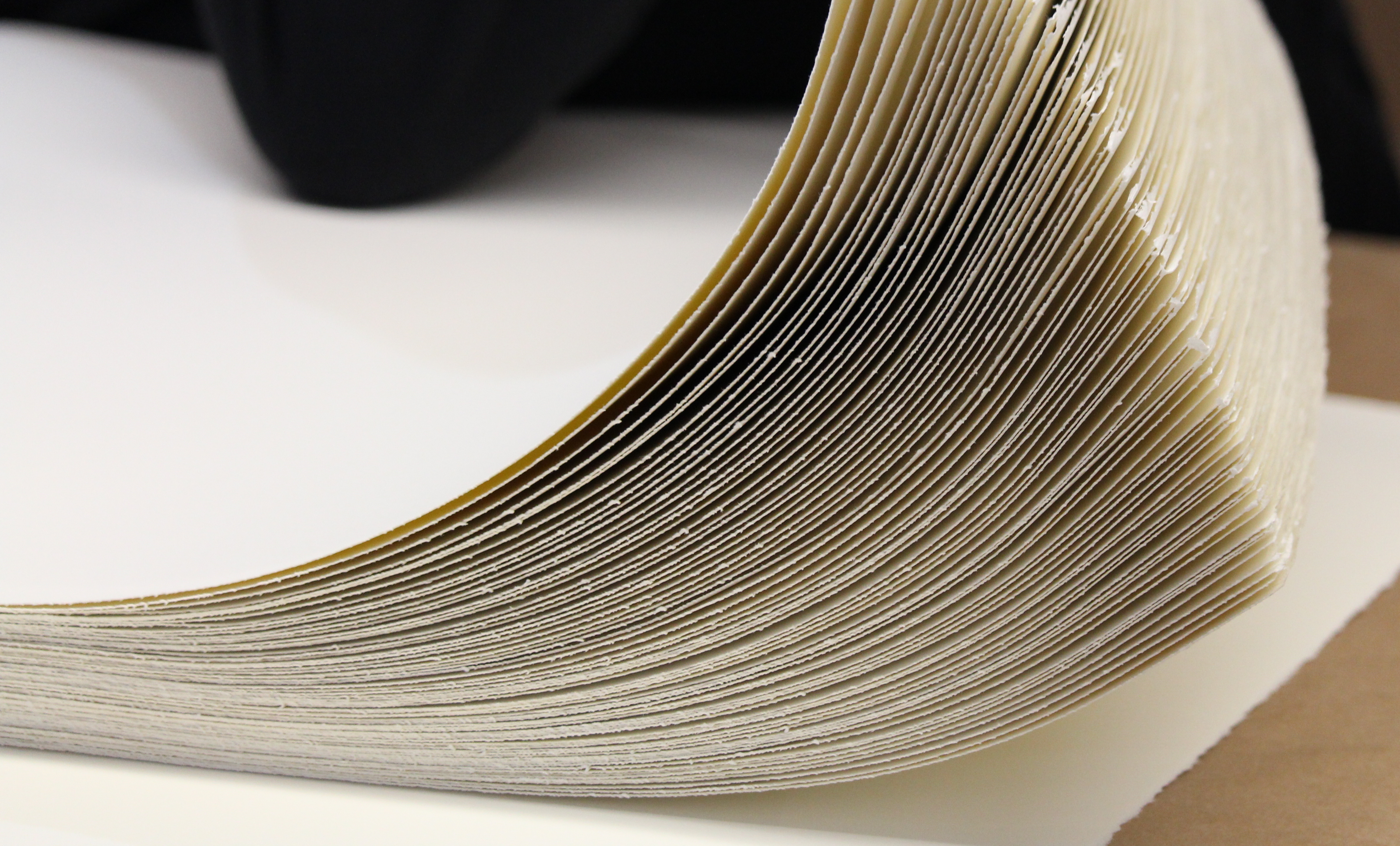
Paper is an inherently crucial element in the printmaking process. Its texture, weight, tone, and surface quality all influence the outcome of an image and the artist’s engagement with it. Within print studios, certain papers are celebrated for their archival properties and their capacity to elevate a print. Yet alongside these prized materials exists a humbler, often overlooked counterpart: newsprint.
This article proposes to re-evaluate the role of newsprint within the fine art printmaking discipline. Typically dismissed for its instability and lack of archival value, newsprint occupies a paradoxical position - indispensable in practice yet rarely acknowledged as an artistic substrate. It functions as a tool of protection, testing, and troubleshooting: a silent enabler in the printmaking process. Its low cost allows artists to take risks, make mistakes, and relinquish the anxiety of preciousness. This echoes Tim Ingold’s view of materials as thinking tools, active participants in the making process rather than passive substrates. By bringing this “invisible” paper to the forefront, the author explores its material and conceptual significance.
In a world saturated with material excess, newsprint’s tendency to fade and disintegrate might instead represent a form of care - an ethical and ecological position that values disappearance as much as endurance.
References
Bolt, B. (2010) Magic is in handling. In: Barrett, E., Bolt, B., ed. (2010) Practice as research: approaches to creative arts enquiry. London: I.B.
Tauris, pp. 27-34.
Hauser & Wirth (2015) Mira Schendel. Monotypes. London: Hauser & Wirth, p. 420.
Ingold, T. (2013) Making. Anthropology, Archaeology, Art and Architecture. London: Routledge.
Pollard, J. (2004) The art of decay and transformation of substance. In Substance, Memory, Display, eds. Renfrew, C., Gosden, C. and
DeMarrais, E. Cambridge: McDonald Institute for Archaeological Research, pp. 47-62.
Pye, D. (1968)The Nature and Art of Workmanship. Cambridge UK: Cambridge University Press.

This work is licensed under a Creative Commons Attribution 4.0 International License.
Copyright (c) 2026 Monika Rycerz