Keywords
Dust
Forest
Art & Science
Environmental Art
How to Cite
Abstract
Dust Forest and Suite for an Imaginary Forest are contemporary printmaking works developed through an ongoing collaboration between artist Dr Emilia Telese and environmental scientist Dr Pavla Dagsson-Waldhauserová, investigating Iceland’s Arctic desert ecosystems and the circulation of high-latitude dust. Drawing on glacial erosion, historical deforestation and atmospheric transport, the works use Icelandic dust, mineral pigment and paper as active. Through monotype, engraving and collagraph processes, geological and climatic transformations are translated into material encounters grounded in time-based processes.
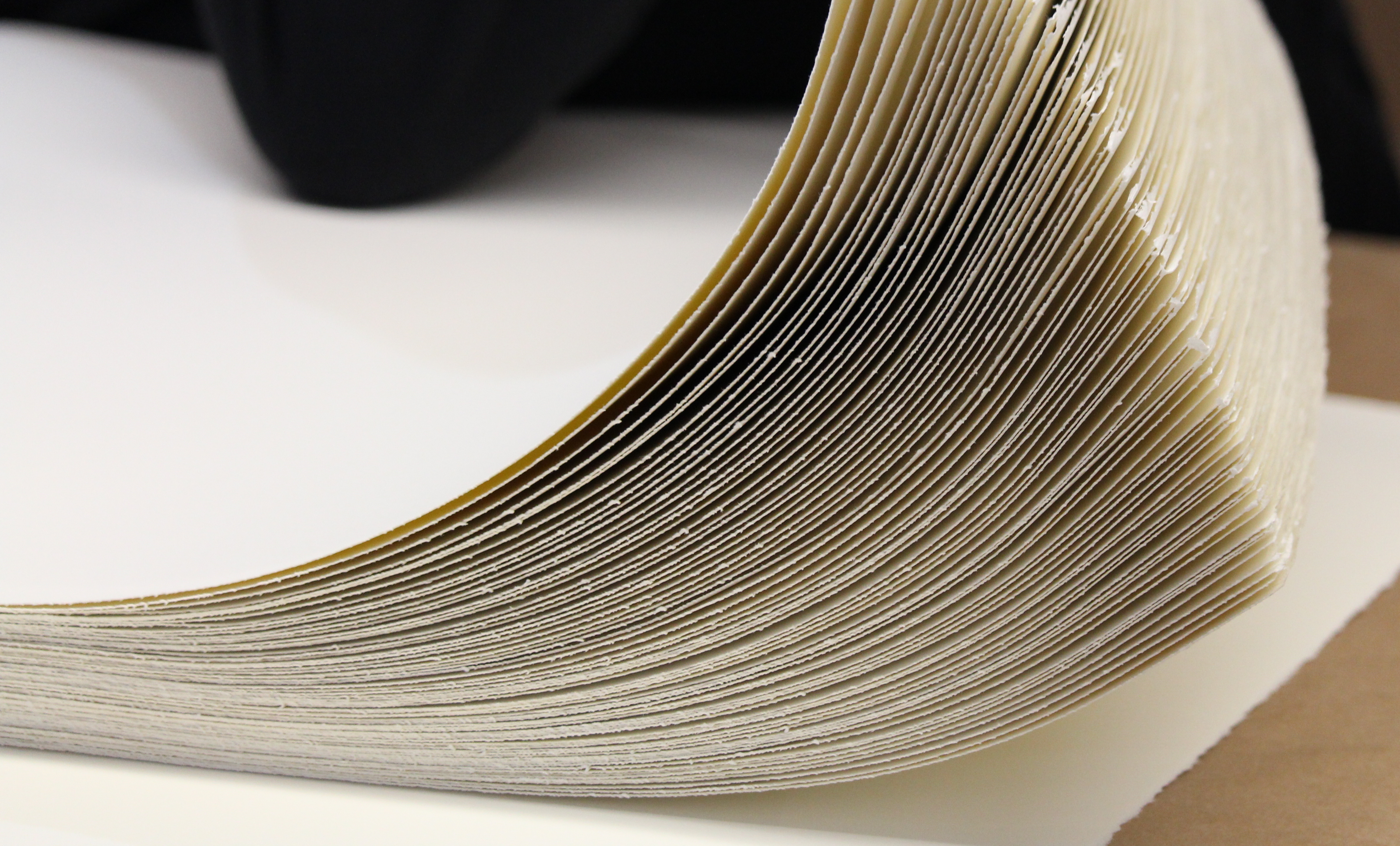
In this paper, Dr Emilia Telese situates these works within arts–science discourse as a parallel mode of inquiry rather than a didactic or illustrative response to scientific research. Central to the analysis is the role of paper as a site of externalised memory, aligned with Bernard Stiegler’s (1998) concept of tertiary memory, in which traces of human and geological time persist beyond the body through technical supports. Paper is examined historically, epistemically and materially, as a vulnerable, responsive surface shaped by the artist’s hands and environmental forces.
By foregrounding fragility, loss and material agency, Dust Forest proposes a reading of her printmaking practice as a medium for the ecological attunement of attention, where memory, matter and scientific knowledge converge through embodied processes.
Drawing on Ingold’s notion of materials as “gatherings of the world” (Ingold, 2013), Bennett’s theory of “vibrant matter” (Bennett, 2010), and Haraway’s call to “stay with the trouble” (Haraway, 2016), this practice-led research situates printmaking as and embodied memory, where print is an interface between scientific observation and poetic perception, translating environmental processes into tangible form.
References
Adorno, T.W. (1997) Aesthetic Theory. London: Athlone Press.
Arnalds O, Dagsson-Waldhauserova P, Olafsson H. 2016. The Icelandic volcanic aeolian environment: Processes and impacts – A review. Aeolian Research 20, 176-195.
Bennett, J. (2010) Vibrant Matter: A Political Ecology of Things. Durham, NC: Duke University Press.
Cartiera Amatruda, Gli Amatruda e Il Fabbricar Carta Ad Amalfi, Amatruda Paper Mills, 2020, https://www.amatruda.it/wp-content/uploads/2020/09/GLI-AMATRUDA-E-IL-FABBRICAR-CARTA-AD-AMALFI.pdf
Clark, A. and Chalmers, D. (1998) ‘The Extended Mind’, Analysis, 58(1), pp. 7–19.
Dagsson-Waldhauserova, P., Meinander, O., eds. (2020). Atmosphere – Cryosphere Interaction in the Arctic, at High Latitudes and Mountains With Focus on Transport, Deposition and Effects of Dust, Black Carbon, and Other Aerosols. Lausanne: Frontiers Media SA., 148 pp. doi: 10.3389/978-2-88963-504-7
Derrida, J. (1996) Archive Fever: A Freudian Impression. Chicago: University of Chicago Press.
Haraway, D. (1988) ‘Situated Knowledges: The Science Question in Feminism and the Privilege of Partial Perspective.’ Feminist Studies, 14(3), pp. 575–599.
Haraway, D. (2016) Staying with the Trouble: Making Kin in the Chthulucene. Durham, NC: Duke University Press.
Kagan, S. (2011) Art and Sustainability: Connecting Patterns for a Culture of Complexity. Bielefeld: Transcript Verlag.
Ingold, T. (2013) Making: Anthropology, Archaeology, Art and Architecture. London: Routledge.
Latour, B. (1987) Science in Action: How to Follow Scientists and Engineers through Society. Cambridge, MA: Harvard University Press.
Morton, T. (2007) Ecology Without Nature: Rethinking Environmental Aesthetics. Cambridge, MA: Harvard University Press.
Rancière, J. (2009) The Emancipated Spectator. London: Verso.
Rheinberger, H. J. (1997) Toward a History of Epistemic Things: Synthesizing Proteins in the Test Tube. Stanford University Press.
Rothko, M. (p.2004, written 1940) The Artist’s Reality: Philosophies of Art. New Haven: Yale University Press.
Sontag, S. (1966) Against Interpretation, and Other Essays. New York: Farrar, Straus & Giroux, 1966.
Stiegler, B. (1998) Technics and Time, 1: The Fault of Epimetheus. Stanford, CA: Stanford University Press.
Zijlema, A. (2018) Personal possessions as cues for autobiographical remembering. PhD thesis. Eindhoven University of Technology.

This work is licensed under a Creative Commons Attribution 4.0 International License.
Copyright (c) 2026 Emilia Telese